Back Pain Program.
Back pain was one of the most frequent and costly health problems we saw at Alan. And a major driver of sick leave for our customers. I led the product from 0→1, with the goal of building a digital care path people could actually stick with.
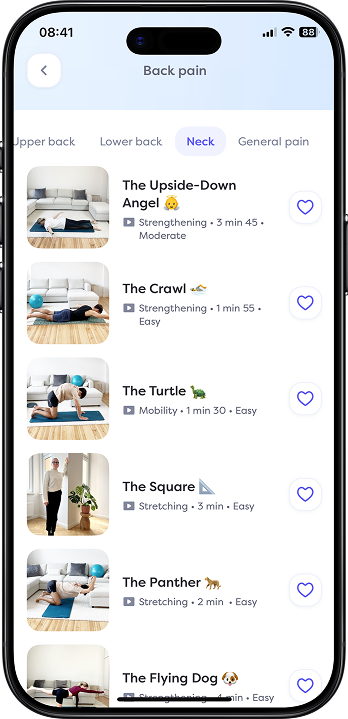
What started as a simple diagnosis and daily-content MVP progressively evolved it into a digital physiotherapy care path combining personalized exercises, professional support and long-term self-management.
- DISCOVERY
- PRODUCT STRATEGY
- UX/UI
- CONTENT PRODUCTION
- TESTING
- MEDICAL HIRING
- MEDICAL COLLABORATION
- PRODUCT DELIVERY
- SCALING
+20k
87%
4
Pain is common. Following-up is harder.
Access alone is not enough
Giving people exercises is not solving the problem if they don't understand what is relevant to their condition.
“"When I go to PT, I want explanations to understand my problem and methods I can use myself to relieve my back pain"”
Recovery is not one-shot
Back pain isn't solved through one interaction. Adherence is a real challenge.
“Most of the time physical activity gets lost in their daily routine”
Clinical rigor can create friction
Healthcare naturally pushes toward completeness: more questions, more explanation, more safeguards. But every additional step also makes care hard to follow.
“If I feel overwhelmed by the therapy content, I lose confidence in my therapist and reduce the practice of PT suggestions”
The MVP focused only on two things.
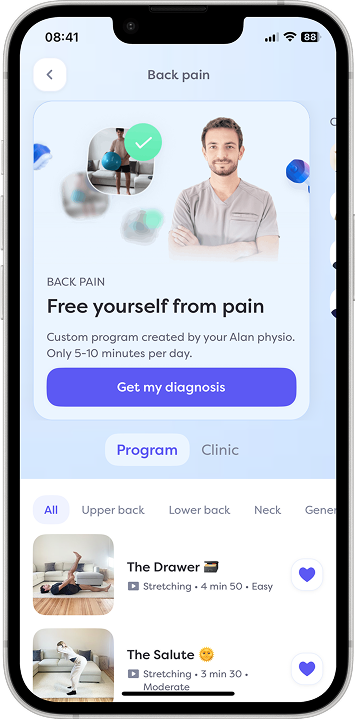
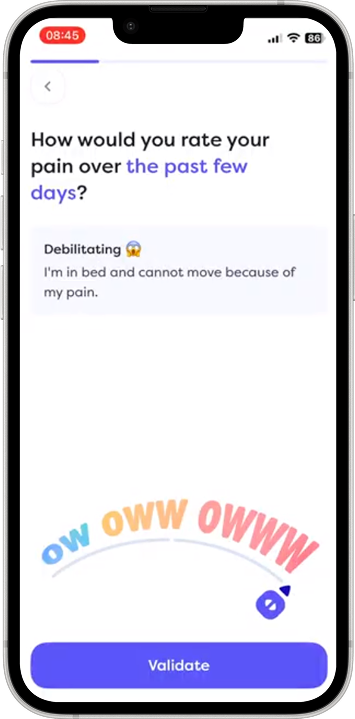
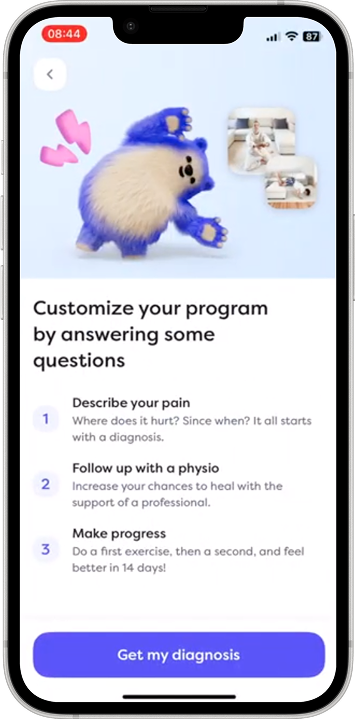
Diagnosis
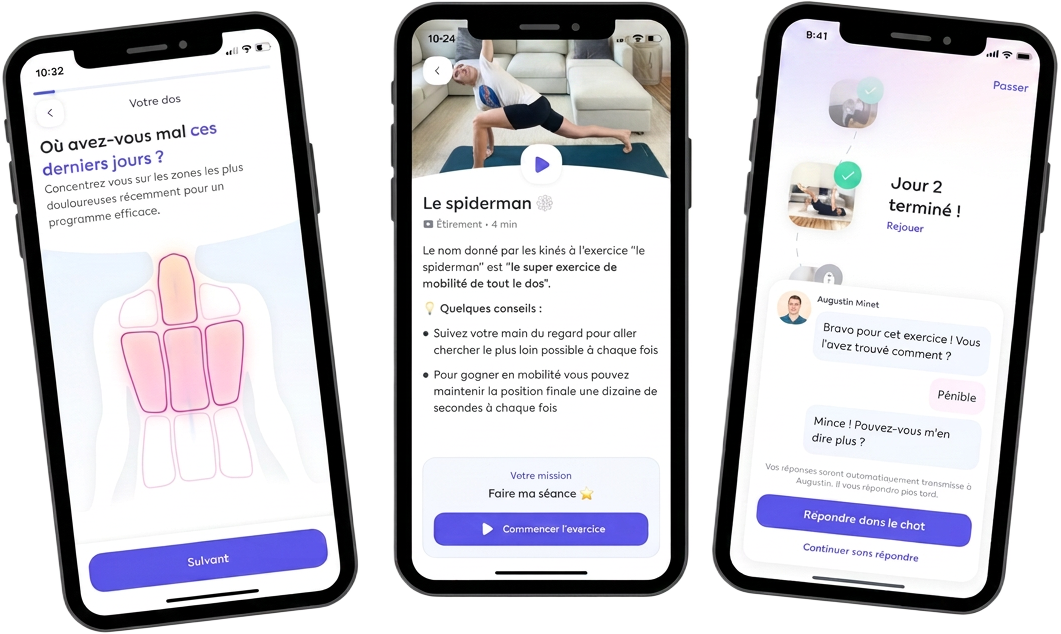
Understand enough about the user's pain and context to personalize the experience.
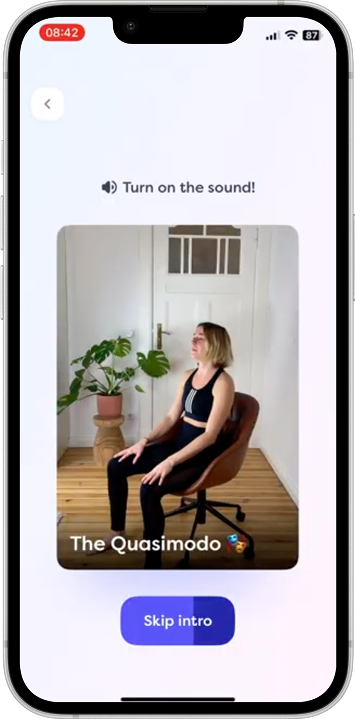
Daily guidance
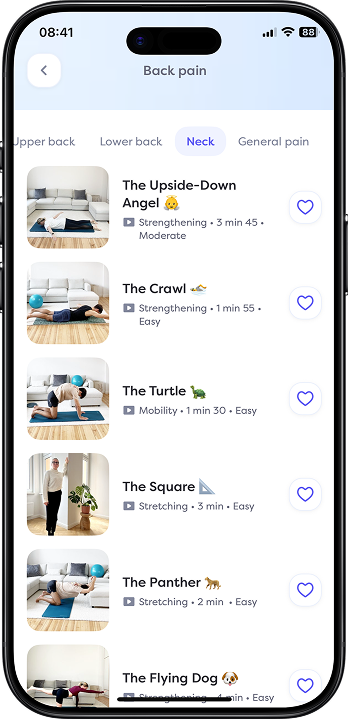
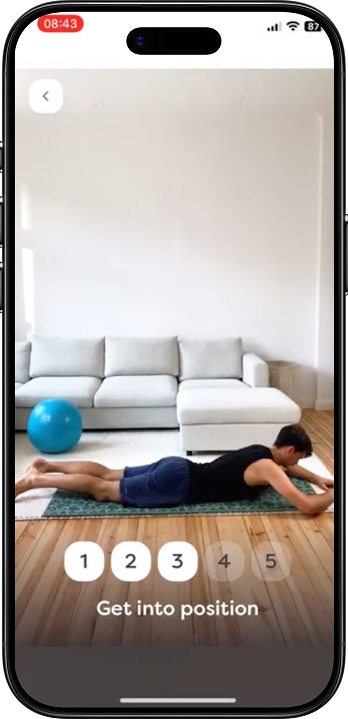
Give users structured, actionable content to help relieve pain and build better habits.
Could we create a digital experience people would actually follow for their back pain?
From MVP to care path
From clinically comprehensive to actionable
Our first version was highly structured: educational content, multiple steps, guided experience. It assumed an “ideal patient” who had time and motivation to read everything before acting.
We simplified the daily experience: fewer steps, exercises coming sooner, less theory before action. We reduced the drop-off rate dramatically.
From static content to a program that adapts
A static sequence of content could get someone started, but it wasn't enough to sustain a longer care journey. Engagement declined after the first week of program.
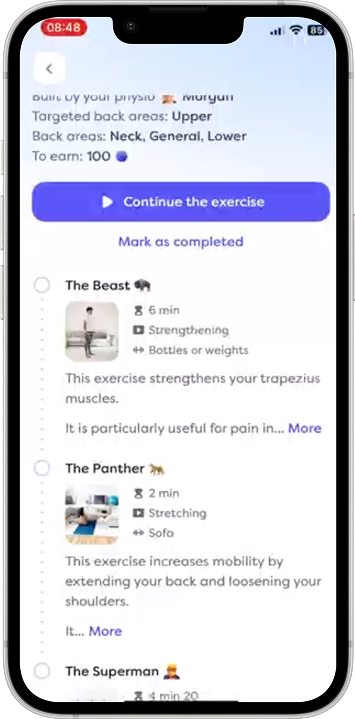
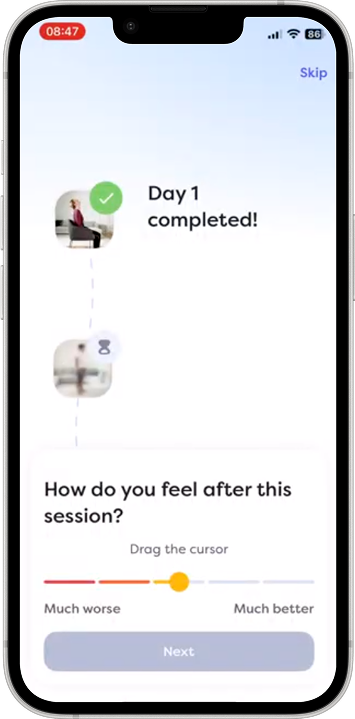
We progressively invested in dynamic programs with sessions of exercises and feedback after sessions. Users could choose at onboarding how long per day they would like to practise exercises
From digital content to digital care
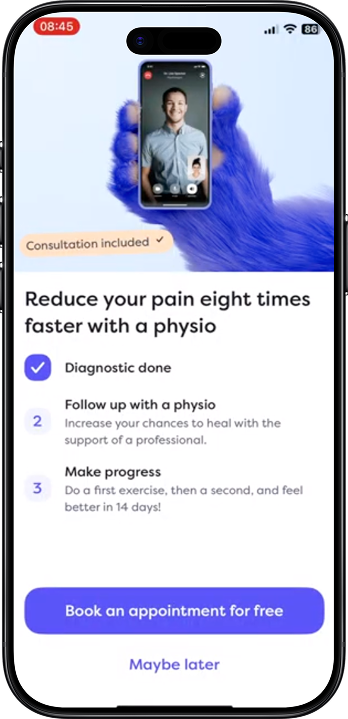
Some needs could not be solved by another article or exercise. Users also needed reassurance, expertise and accountability.
We added healthcare-professional touchpoints through physiotherapist teleconsultations, chat and stronger medical involvement in product decisions. I worked closely with health professionals on the care model and pushed to hire a dedicated physiotherapist referent.
From guided care to autonomy
After defining success by the diagnosis completion rate and the program completion and satisfaction rate, we asked ourselves the hard questions: are we optimizing for program retention or for autonomy and long-term health?
We redefined success, looking mainly at adherence over time and self-reported improvement. We eventually added an offboarding experience and a reusable toolkit of exercises and resources.